
With every container
- 01Bill of lading
- 02Invoice and packing list, per bundle
- 03Origin certificate, EUR.1 on EU-bound lots
- 04Fumigation record for the wooden skids
- 05Cargo insurance when shipped CIF
Shuttering · Film faces · Anti-slip floors
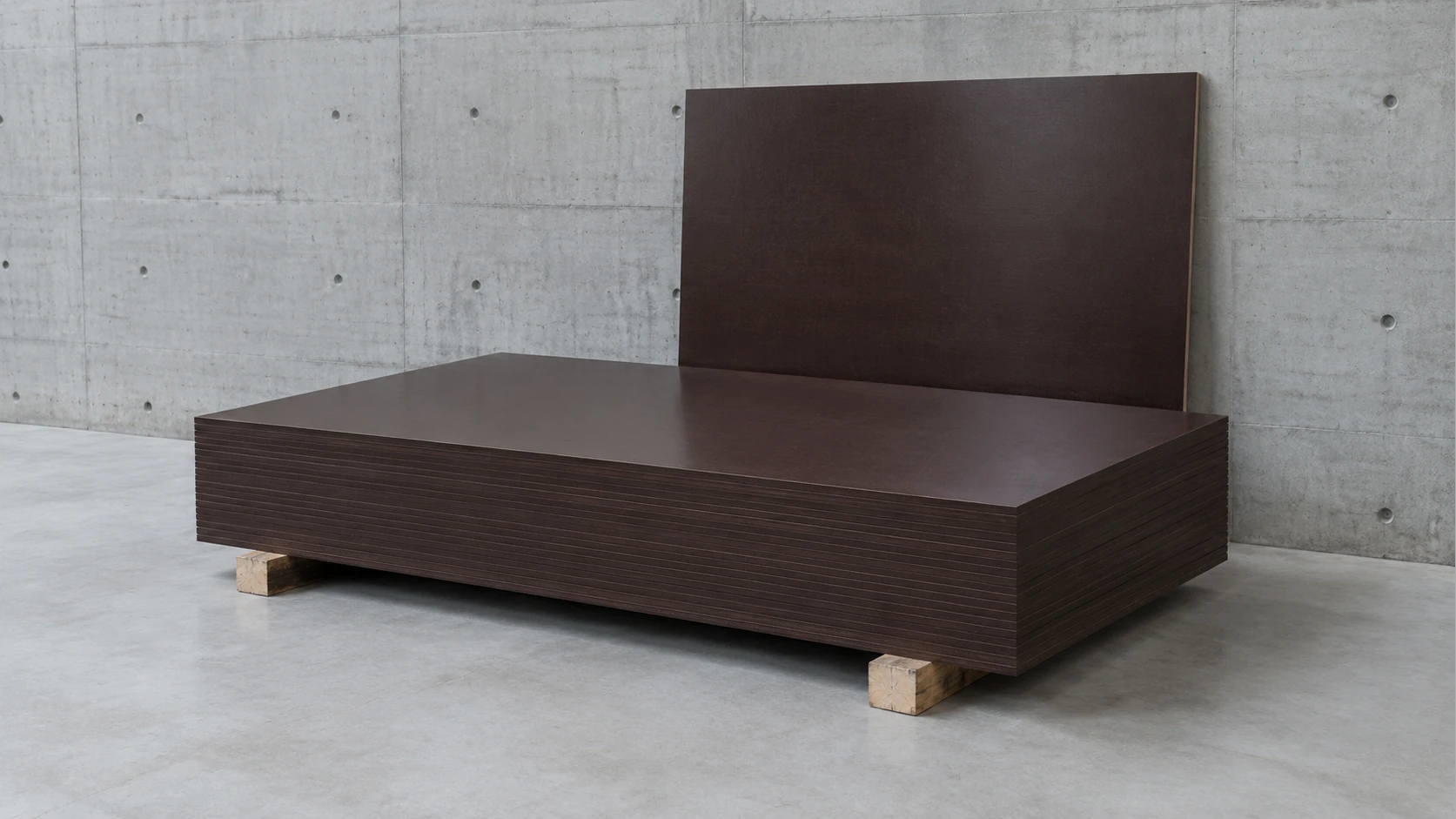
Formwork plywood, graded before it ships.
A leading Vietnamese manufacturer and exporter of construction plywood, producing through two member mills in northern Vietnam. Every order goes to the mill and the build that suit your pours, is inspected before the doors close and ships with its documents.
Why Betonply
“18 mm film-faced plywood” can describe a short-cycle panel or a phenolic panel built for about 25. The difference sits in the core grade, how the core is joined, the film weight, the glue system and the thickness tolerance. Betonply puts those lines on the quotation, so you compare panels rather than prices.
Eucalyptus or acacia cores, graded and laid without gaps.
Melamine (MR) or phenolic (WBP), stated separately from emission class.
Grams per square metre on the face, not just a colour.
Thickness tolerance written for the build, typically ±0.5 mm.
How an order runs
You send the application, pour count, thickness, sheet size, quantity and port. We ask what is missing before we price anything.
We route the order to whichever of our two member mills has the film, core and press for that build, and confirm the specification line by line.
Before loading, bundles are checked against the agreed build and you receive the inspection photos.
Draft documents reach you for approval after loading; the full set follows the vessel.
The range
Construction plywood only: faces, films and cores chosen for wet, heavy, repeated work.
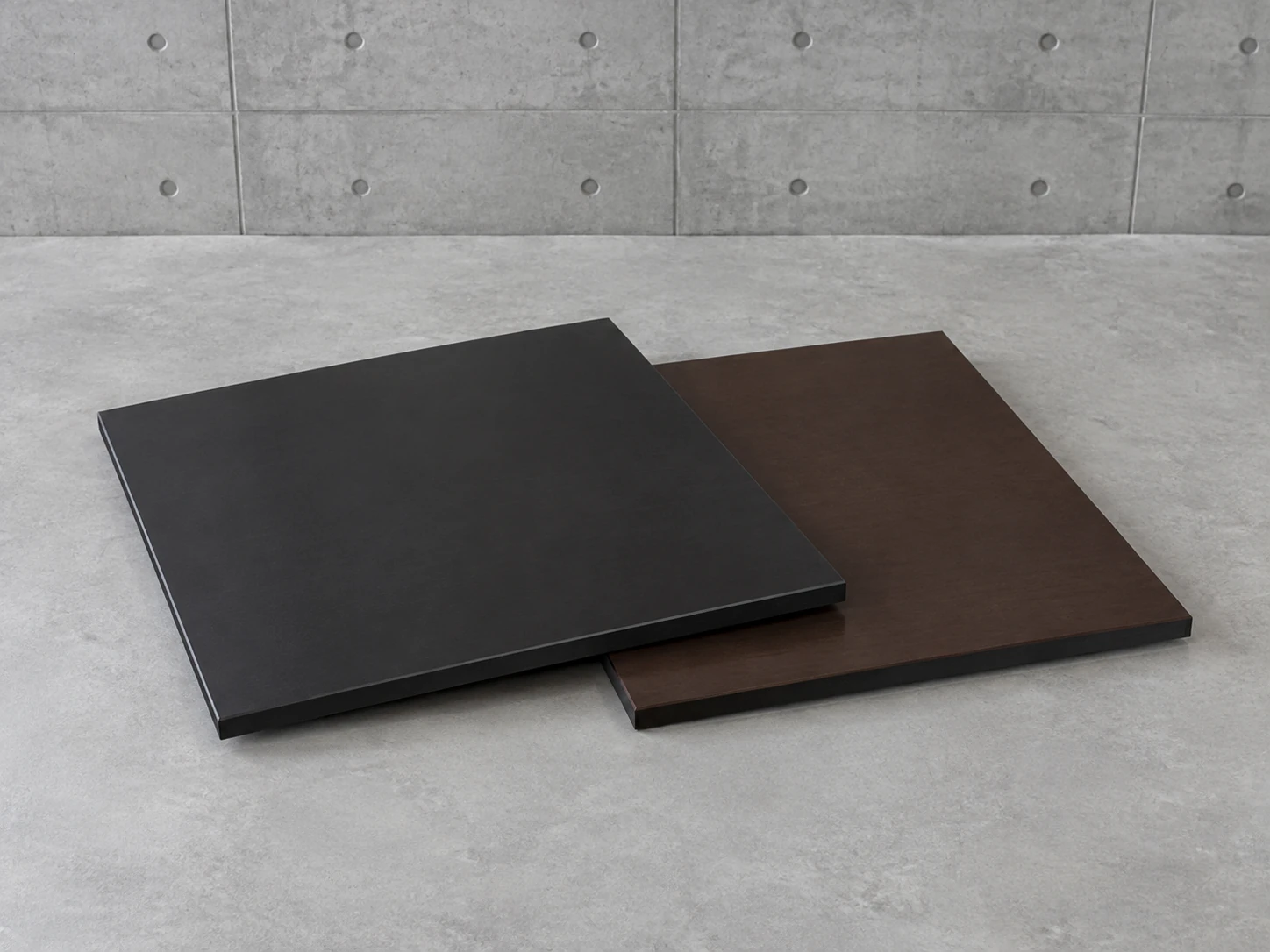
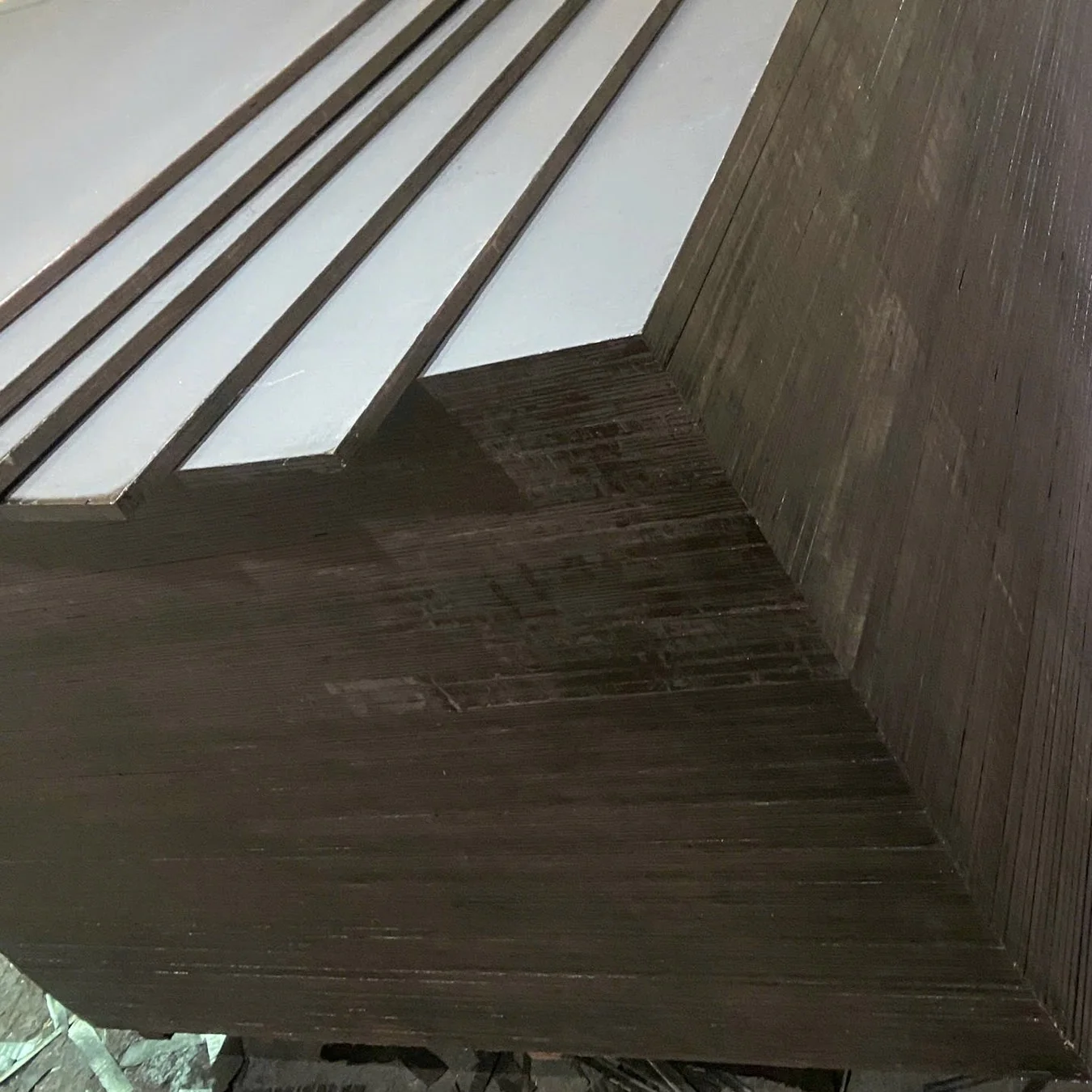
Brown or black phenolic film on both faces, sealed edges. For wall, column and slab formwork.
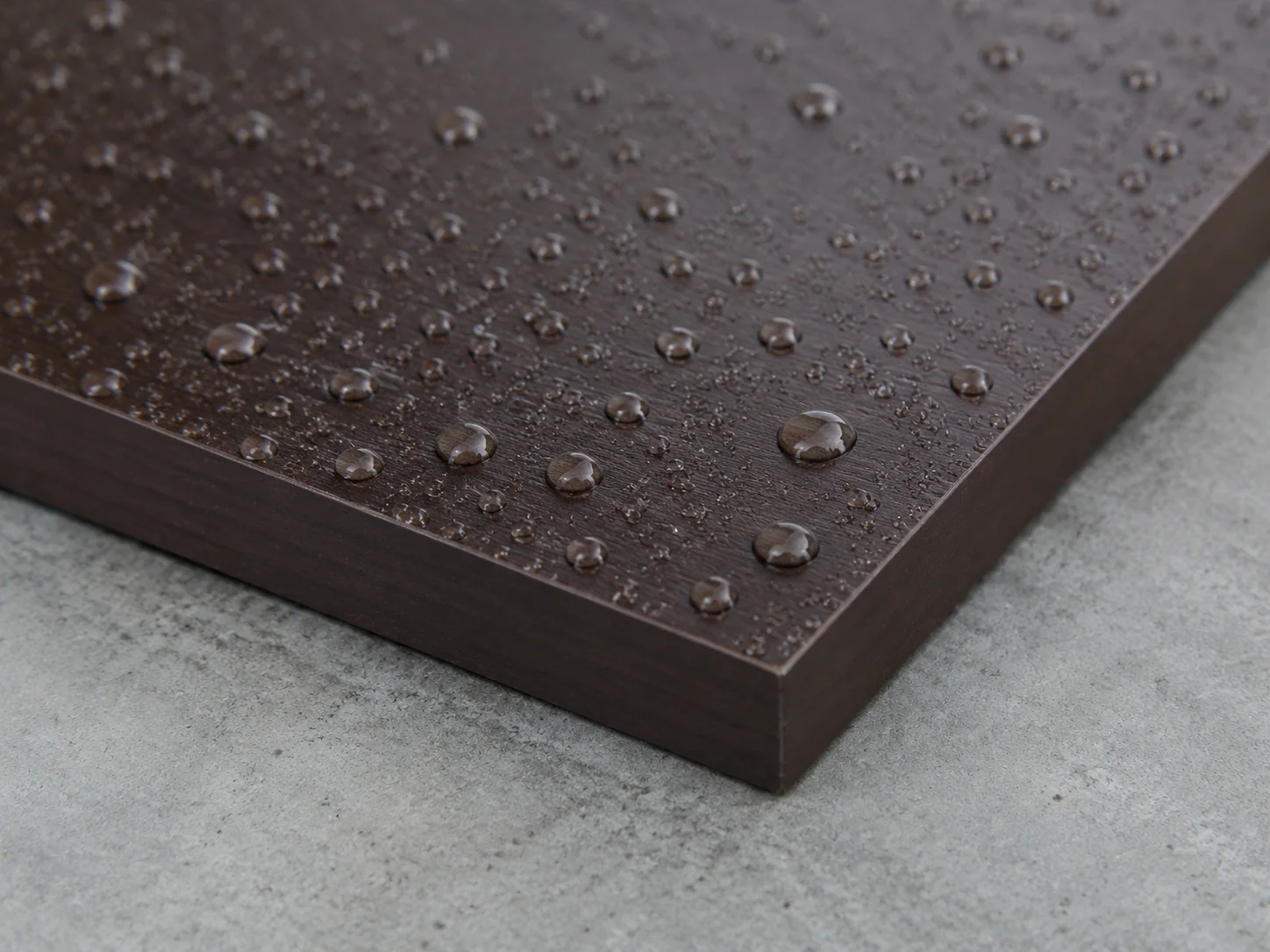
Phenolic glue throughout for long reuse cycles on repetitive pours.
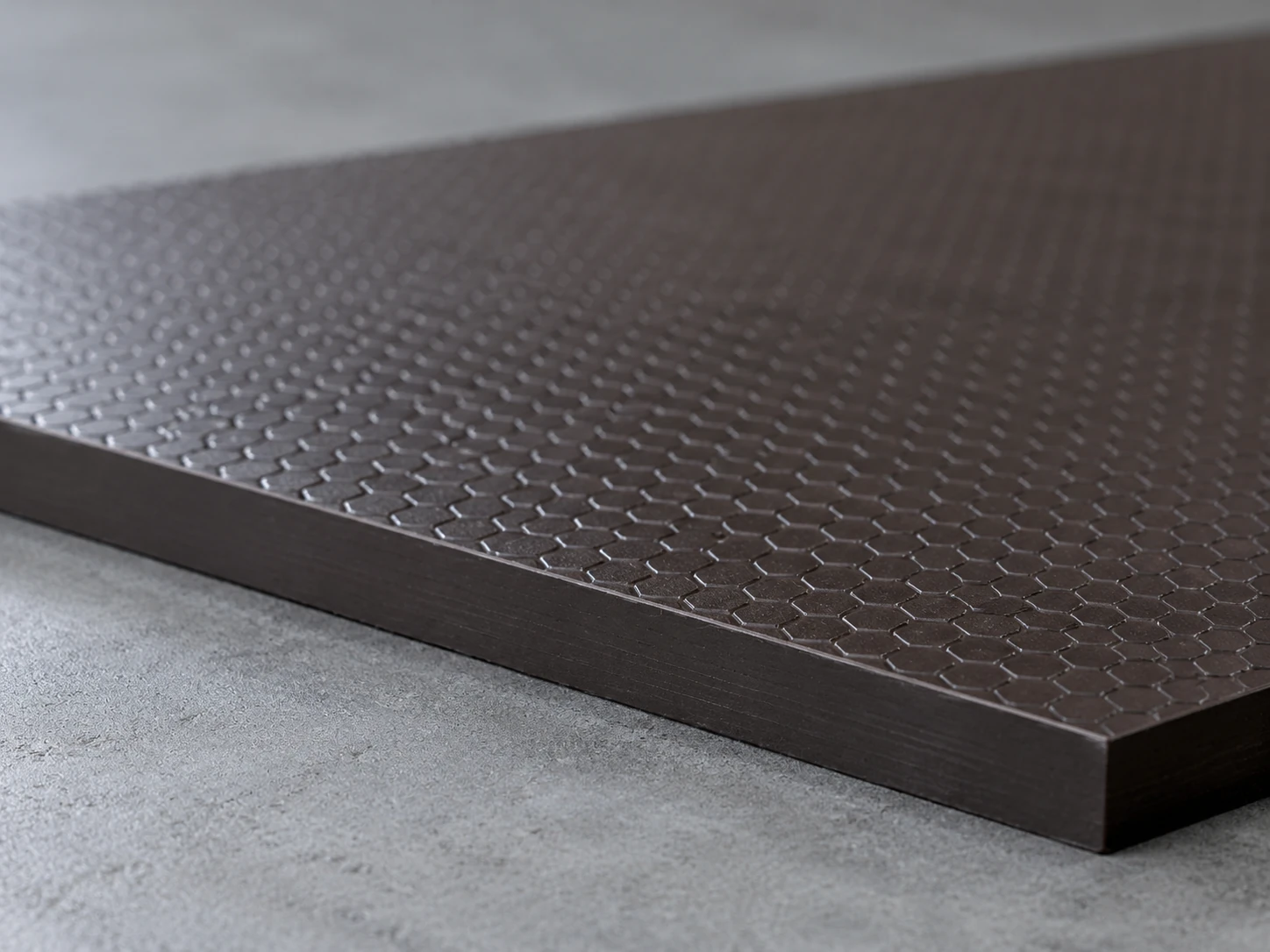
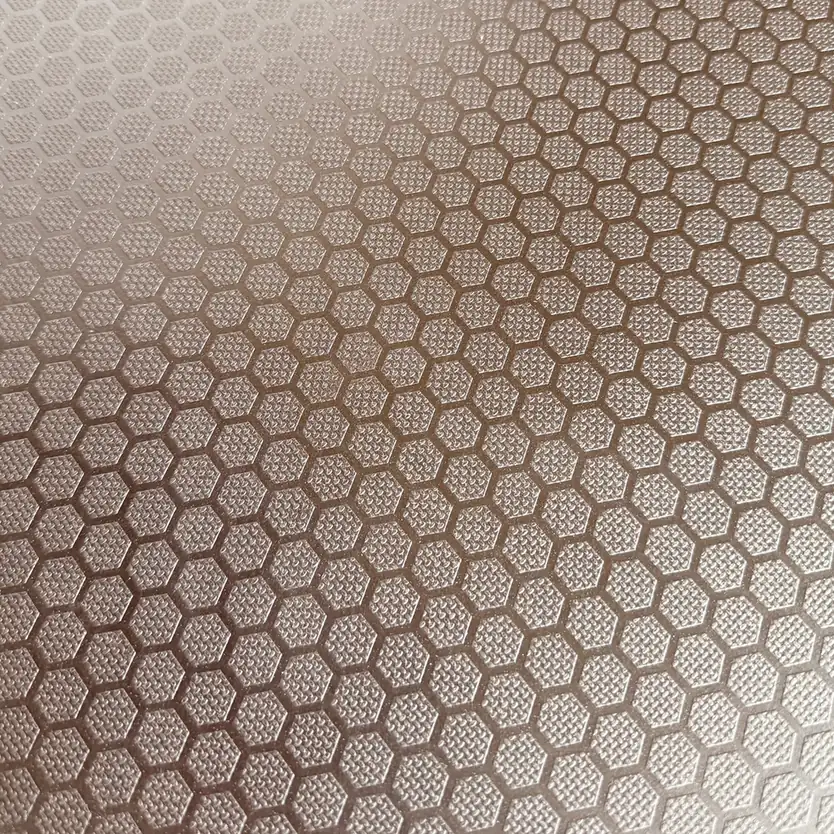
Heavier film embossed with a hexagonal, mesh or rice-grain pattern for floors, platforms and walkways.
Exterior and structural panels with melamine or phenolic glue are available on request: send the specification.
The comparison sheet
The same columns for every offer. Reuse figures are targets for the build used and handled correctly on site.
| Build | Core | Glue | Film | Reuse target* | Best for |
|---|---|---|---|---|---|
| MR film-faced | Eucalyptus or acacia | Melamine (MR) | 120–135 g/m² | 12–15 pours | Walls, slabs, general formwork |
| WBP film-faced | Eucalyptus or acacia, A grade | Phenolic (WBP) | From 135 g/m² | Up to about 25 pours | Repetitive pours, cores, civil works |
| Anti-slip | Eucalyptus or acacia | Phenolic or melamine | About 220 g/m², embossed | By build | Vehicle floors, platforms, walkways |
| Short-cycle | Eucalyptus or acacia | Melamine (MR) | By order | By build | One-off or temporary works |
*A reuse cycle is a target, not a fixed property of the panel: it depends on transport, storage, release agent, vibration and how cut edges are resealed.
Reuse cycles
A cheaper panel that leaves the site after a few pours can cost more per cubic metre of concrete than a phenolic build that keeps going. We size the build to your pour count.
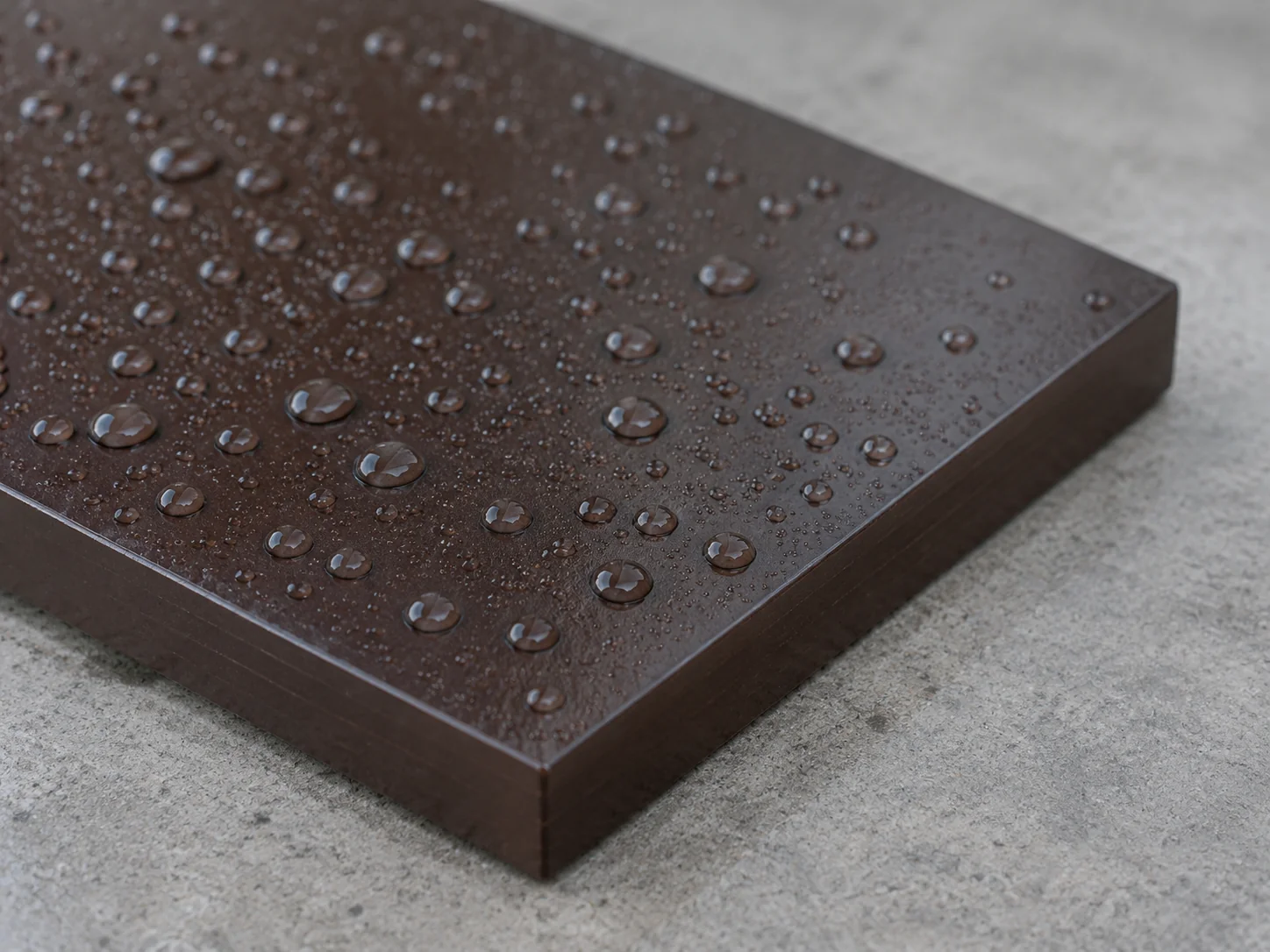
The film
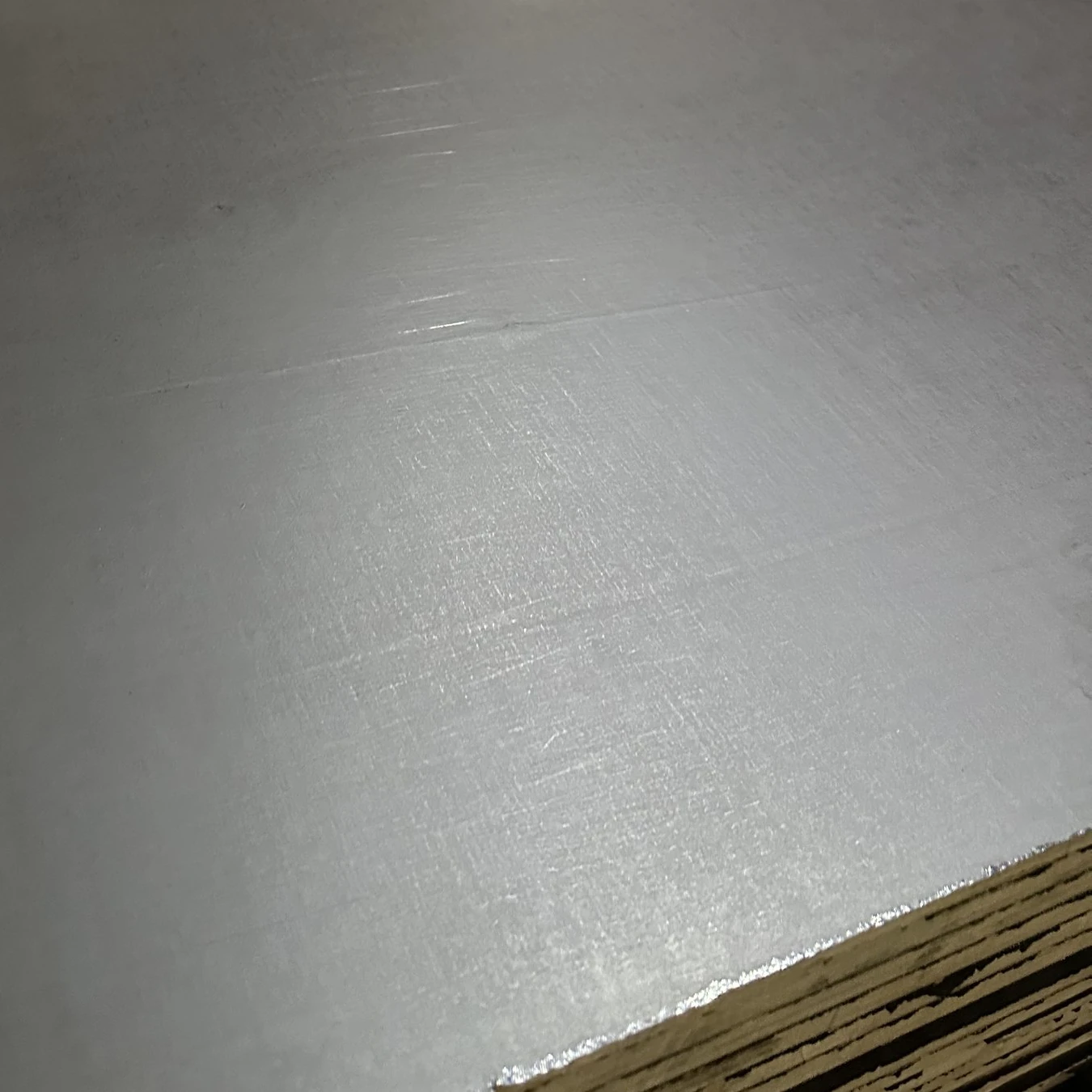
Phenolic film is pressed onto both faces so water beads and concrete releases cleanly. Standard film is around 120–135 g/m²; premium builds start from 135 g/m². Dark brown is the usual colour, black on request. Film brand, weight and colour are fixed per order.
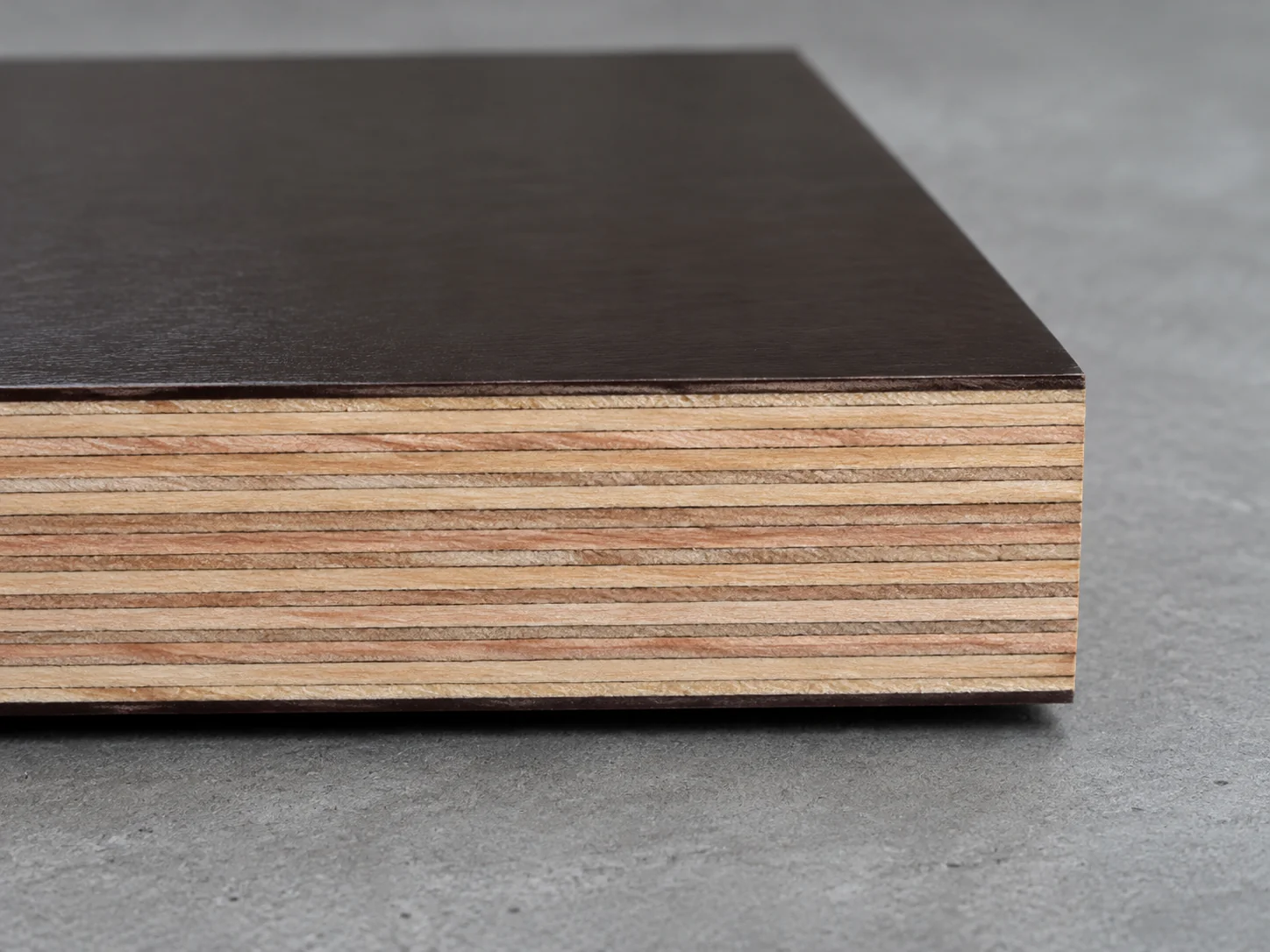
Under the film
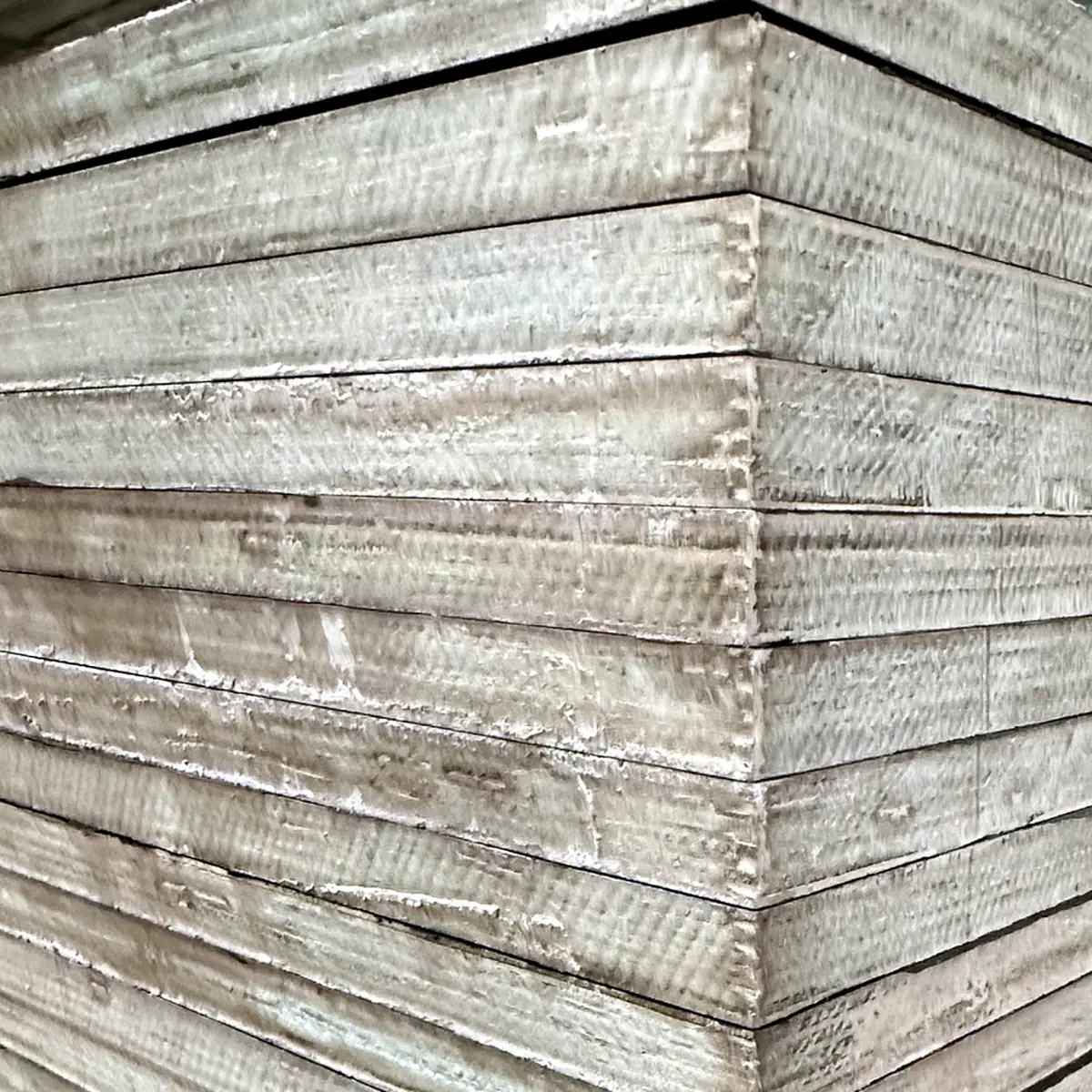
Film-faced and anti-slip panels use eucalyptus or acacia cores. An A-grade core, laid tight with no gaps or overlaps, keeps the face flat under vibration and holds screws at the edges. Every cut edge in the inspection shows it.
Anti-slip
A heavier film is embossed with a hexagonal, wire-mesh or rice-grain pattern on the top face, smooth film below. It goes onto trailer and container floors, scaffold platforms, stages and walkways that get wet.
Sizes
| Sheet size | Where it is used | Common thicknesses |
|---|---|---|
| 1250 × 2500 mm | Europe: wall and slab formwork systems | 12 · 15 · 18 · 21 mm |
| 1220 × 2440 mm | Worldwide 4 × 8 ft sheet | 9 · 12 · 15 · 18 mm |
| Custom and cut-to-size | Formwork systems, vehicle floors | On request |
Other thicknesses from the network on request. Every bundle carries one size and one build.
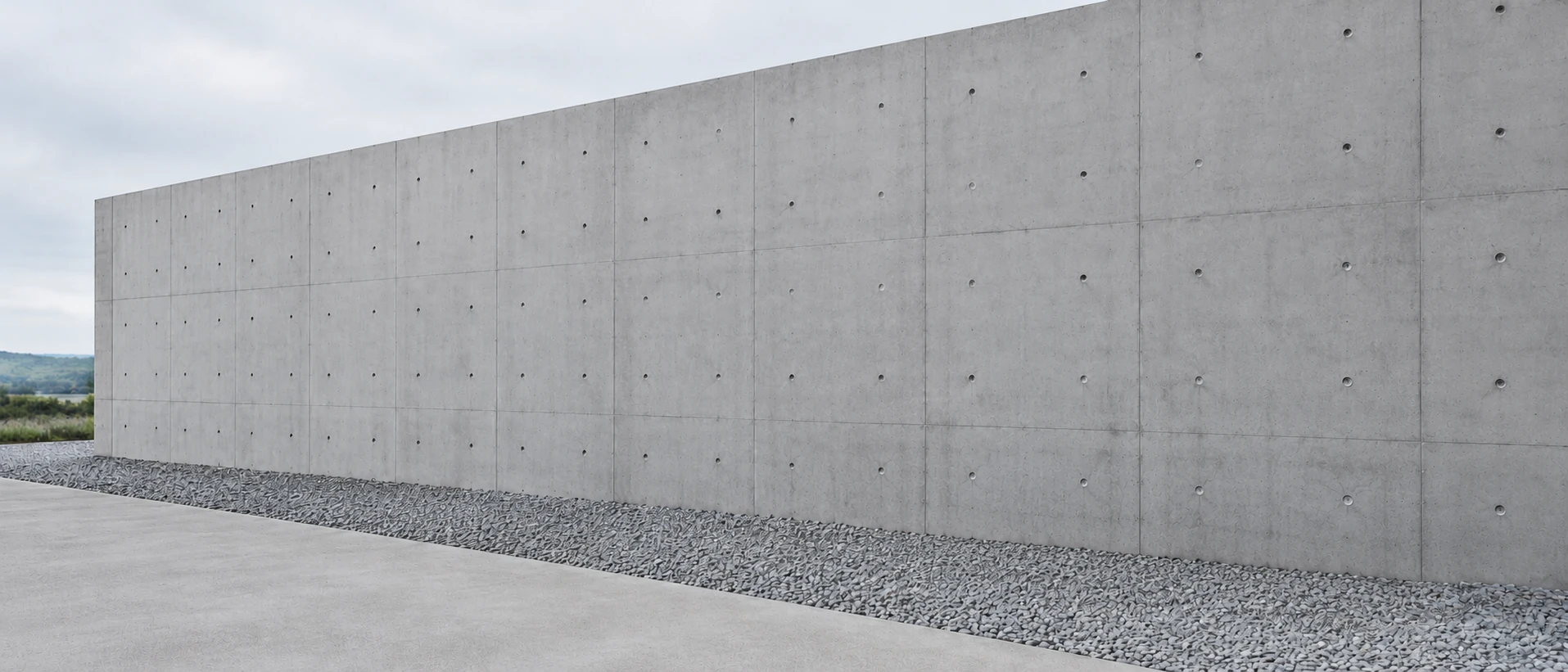
What the panel leaves behind
Joint lines, tie-holes and the texture of the film all stay in the wall. A flat panel with a sound film gives a clean, even surface pour after pour.
Where it goes
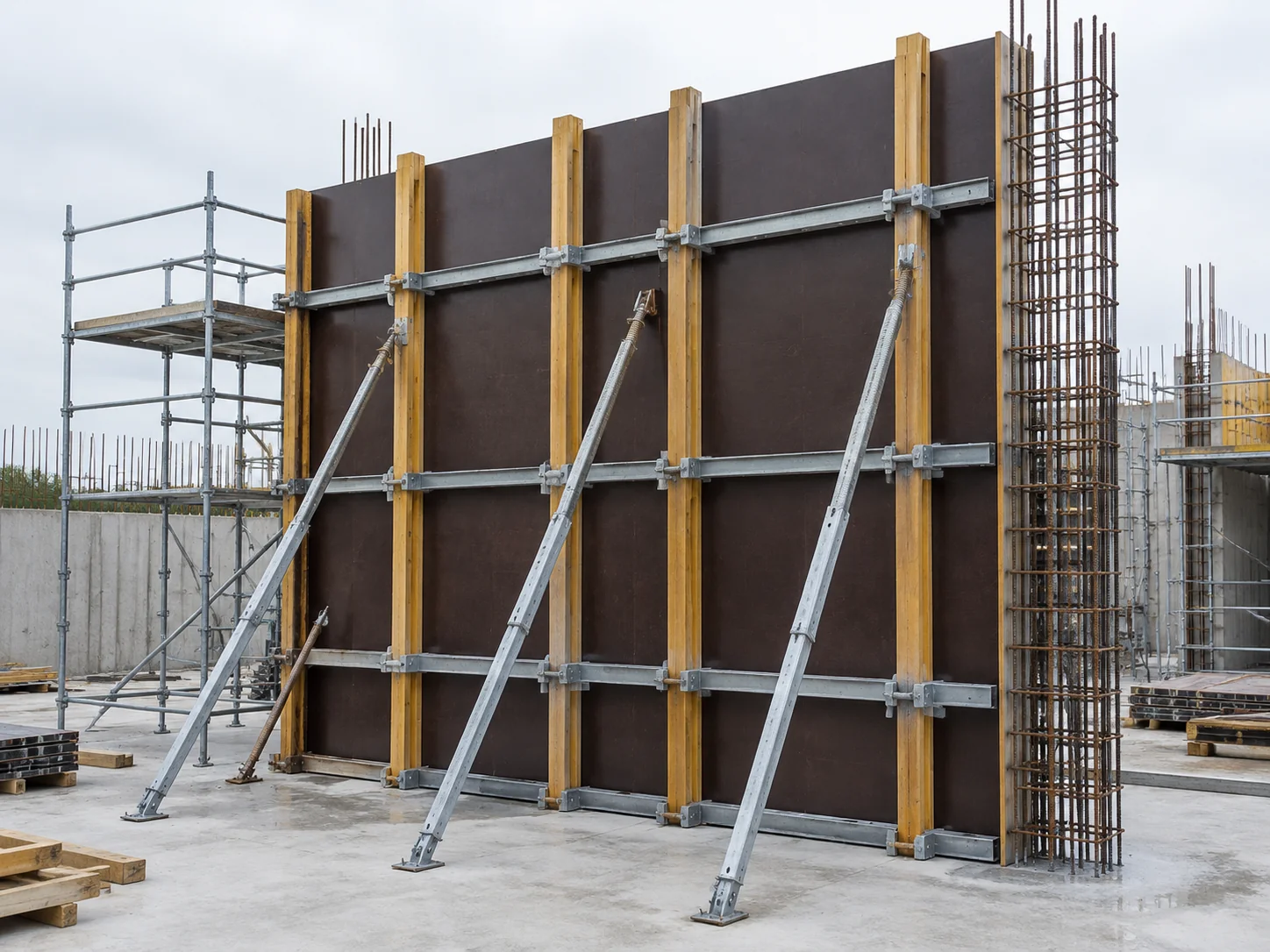
Facing for timber-beam and steel-frame wall systems.
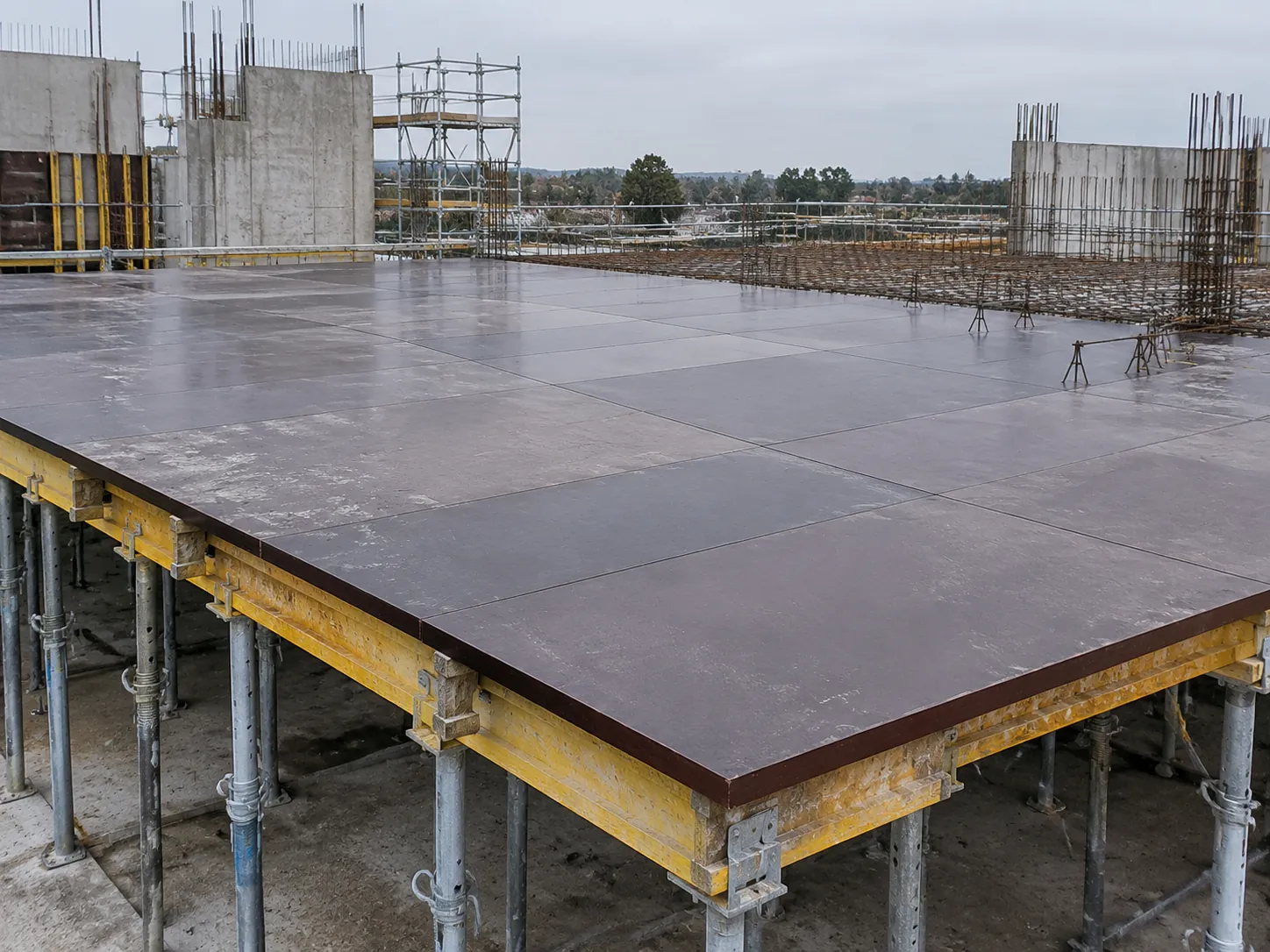
Flat sheets on beams and props for floor slabs.
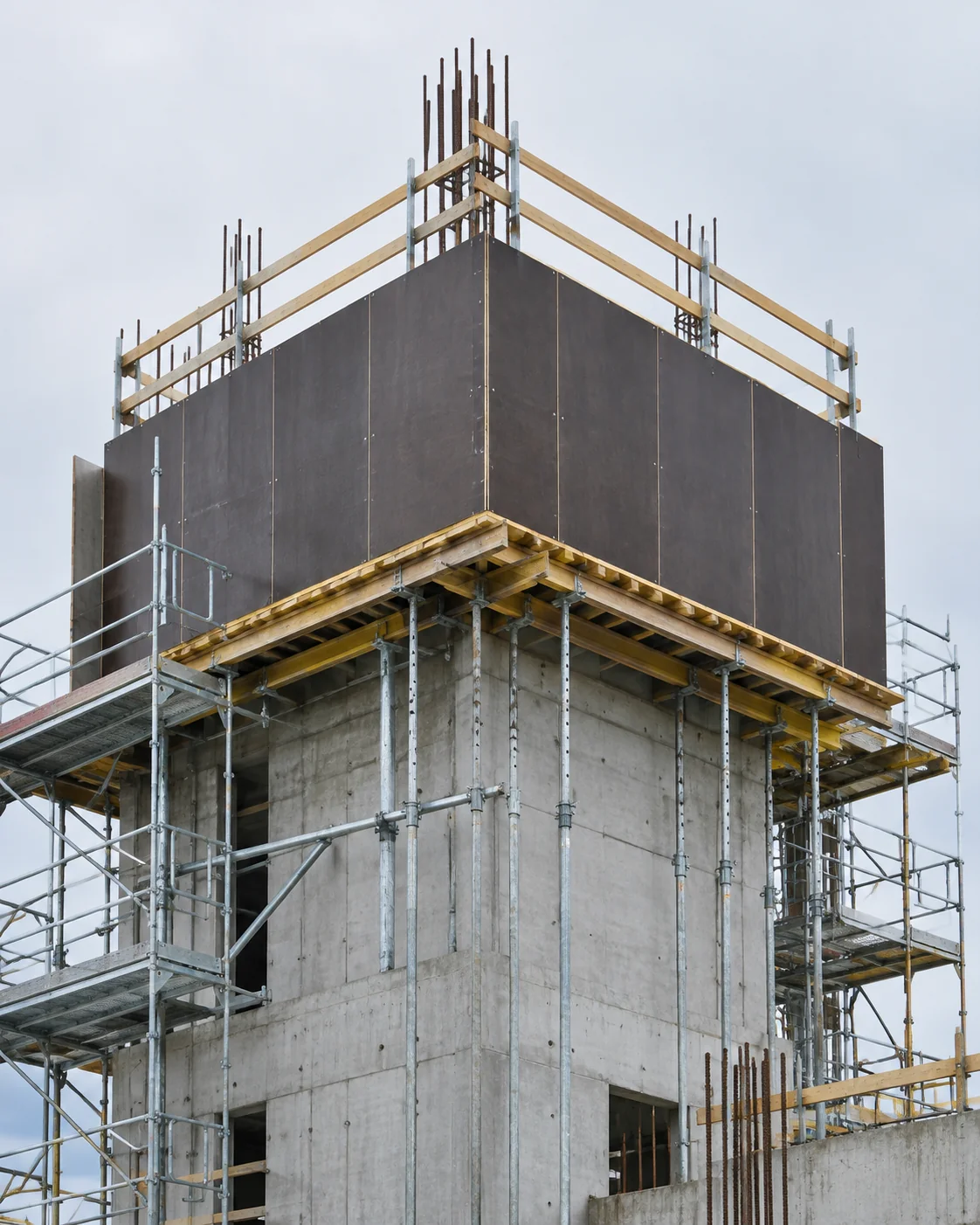
Repeated cycles on climbing and column forms.
Real panels, close up
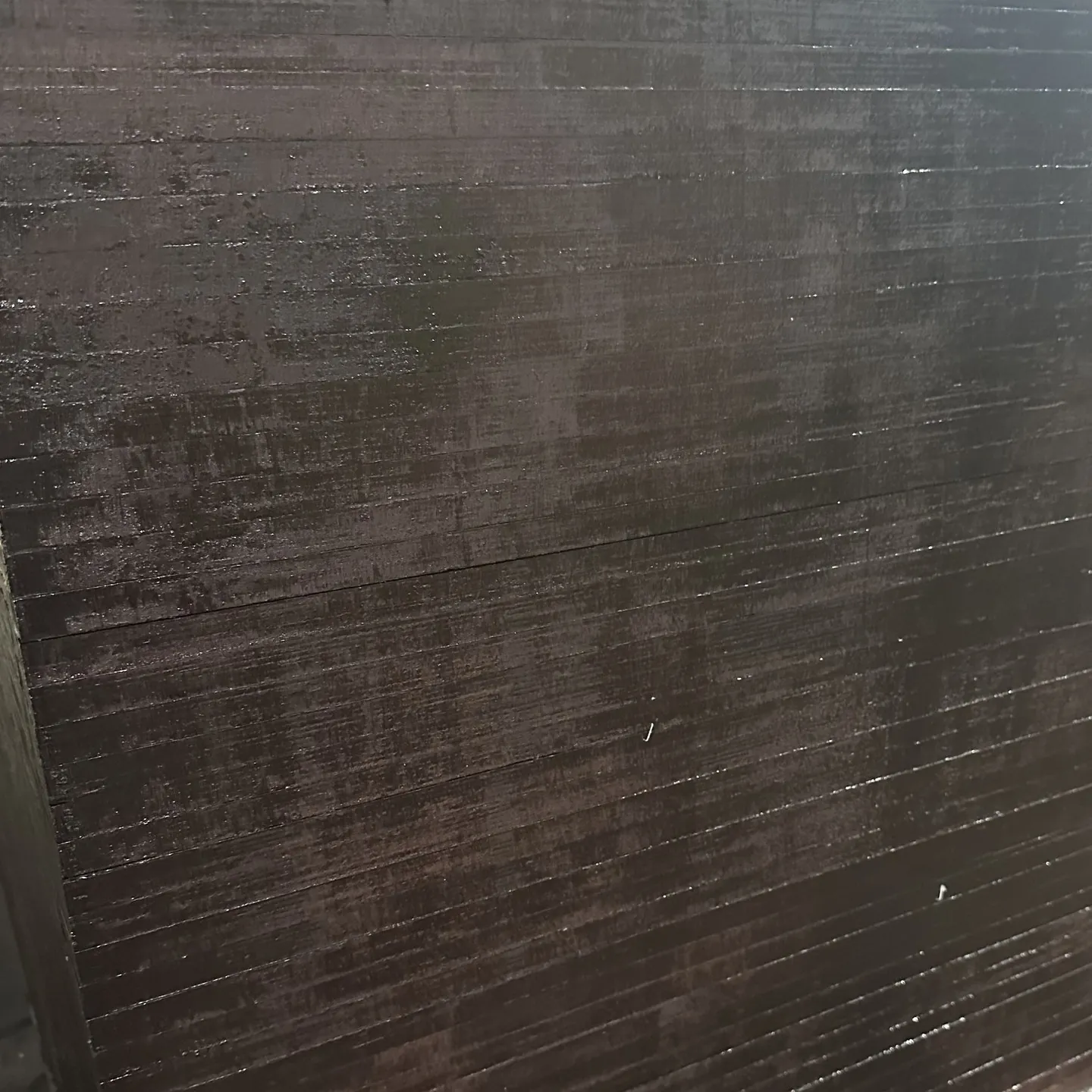
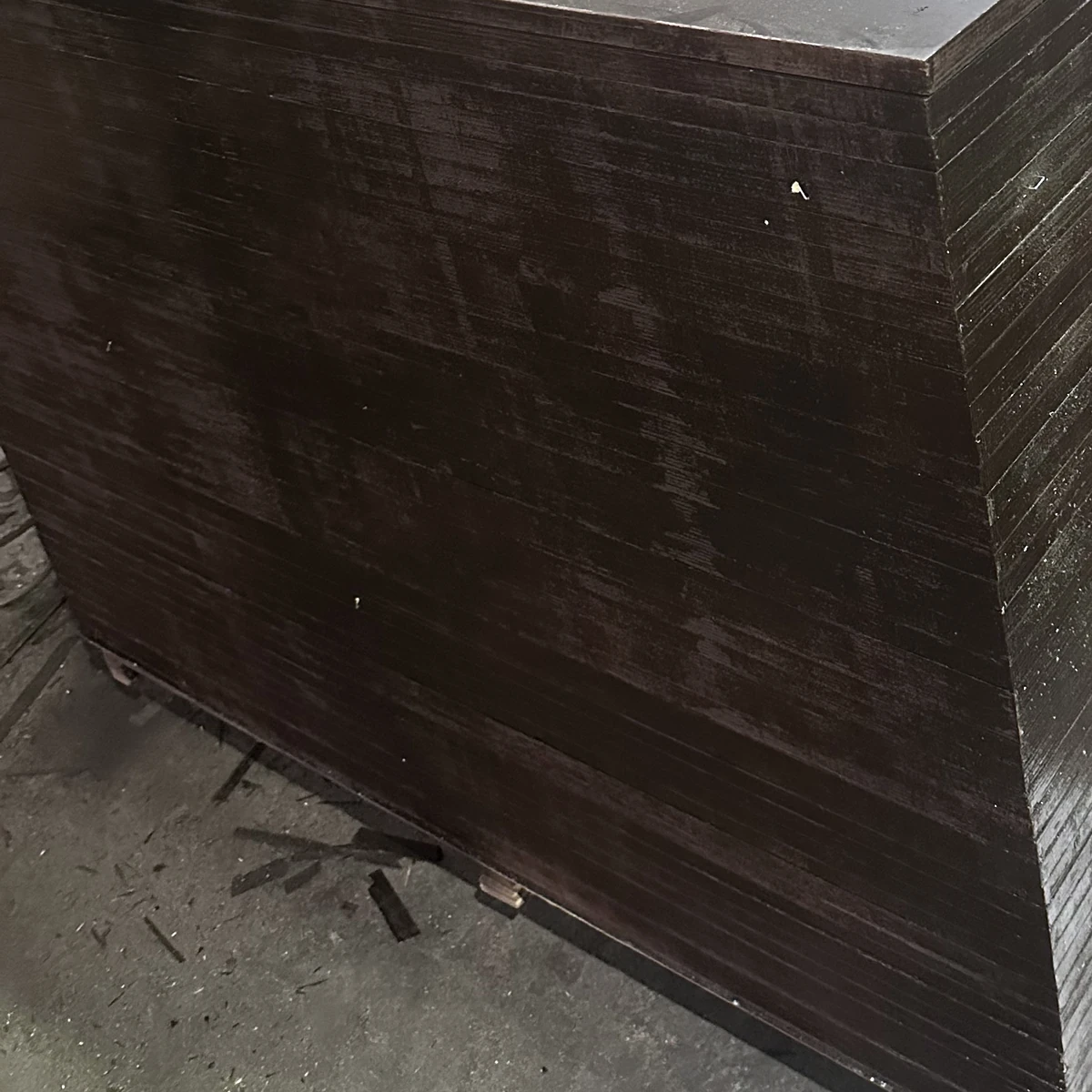
Photographs of real film-faced and anti-slip panels: the details an inspection looks at.

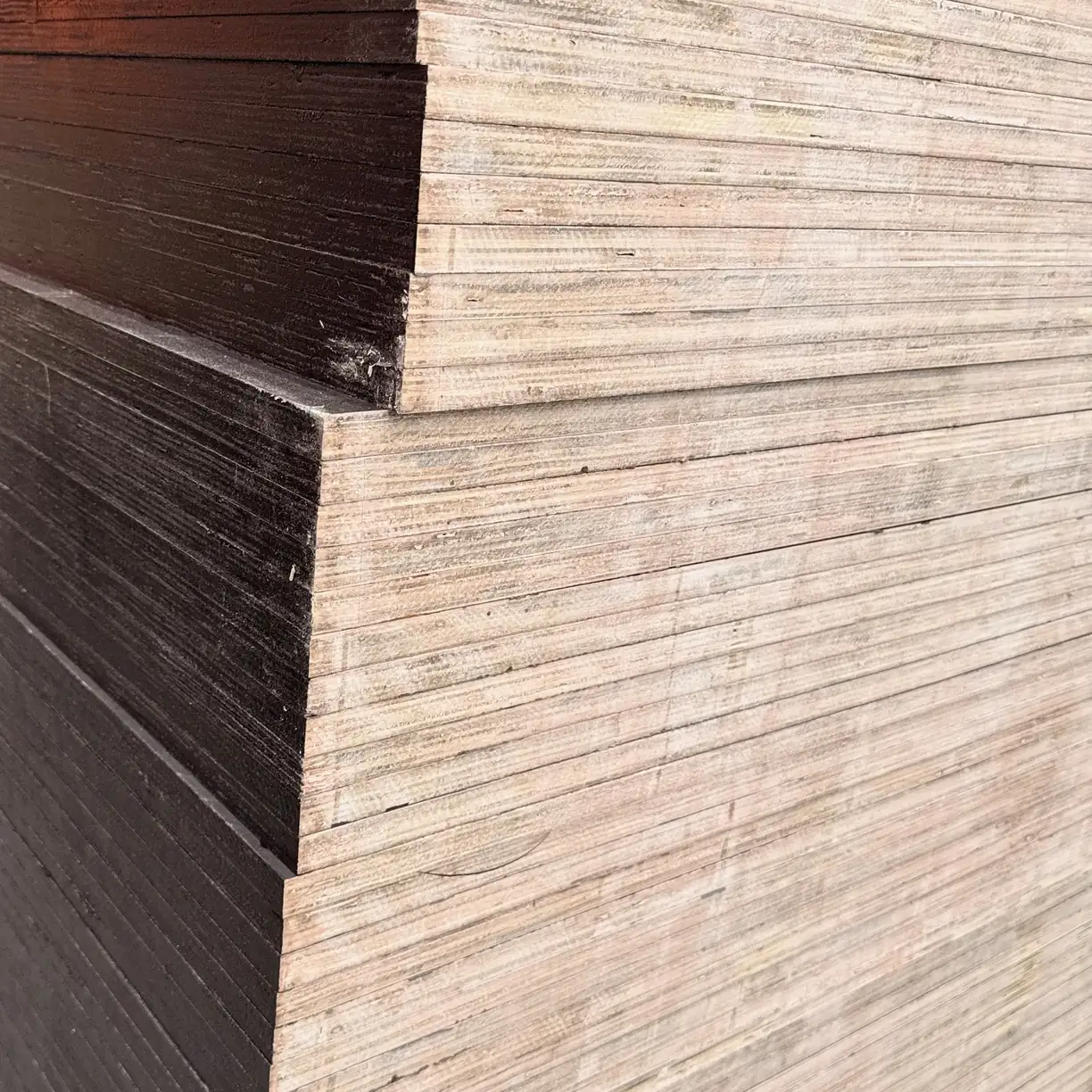
Inspection
Before a container is loaded, bundles are opened and checked against the build on your order. You get the photos while there is still time to act.
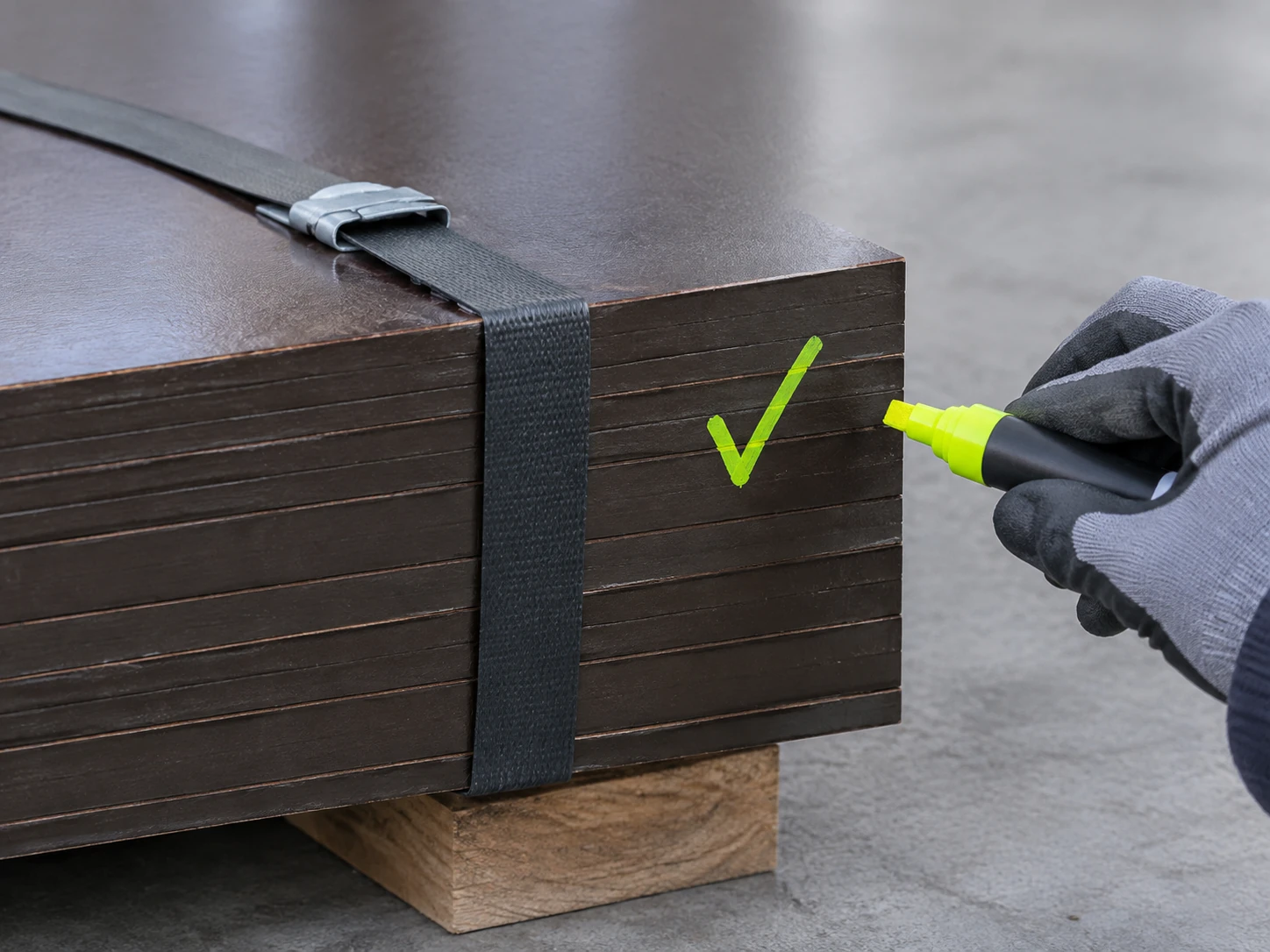
Measured at several points per sheet against the stated tolerance.
Full coverage, no bubbles, tears or lifted corners.
Sealed all round, square, no open core gaps.
Sheets lie flat in the bundle, no warping.
Sheets per bundle and sheet size as packed.
Top boards, corner protectors and straps in place.
Every bundle that passes gets a tick.
Inspection photos reach you before the balance is due.Mixed containers
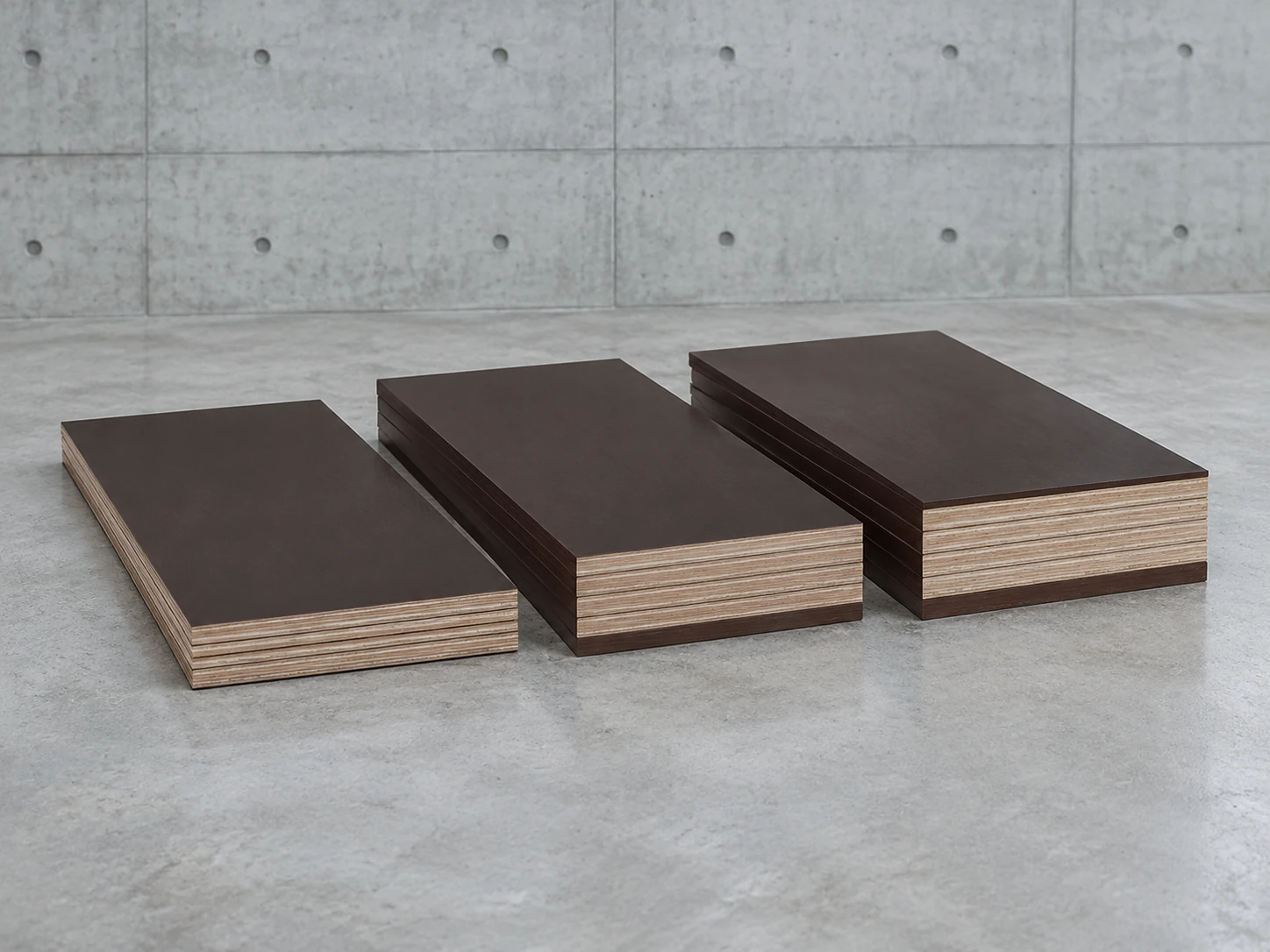
Most containers carry one or two builds. Three to six can travel together by agreement: different thicknesses, a few bundles of anti-slip, a trial build next to your regular one. Each bundle is one size and one build.
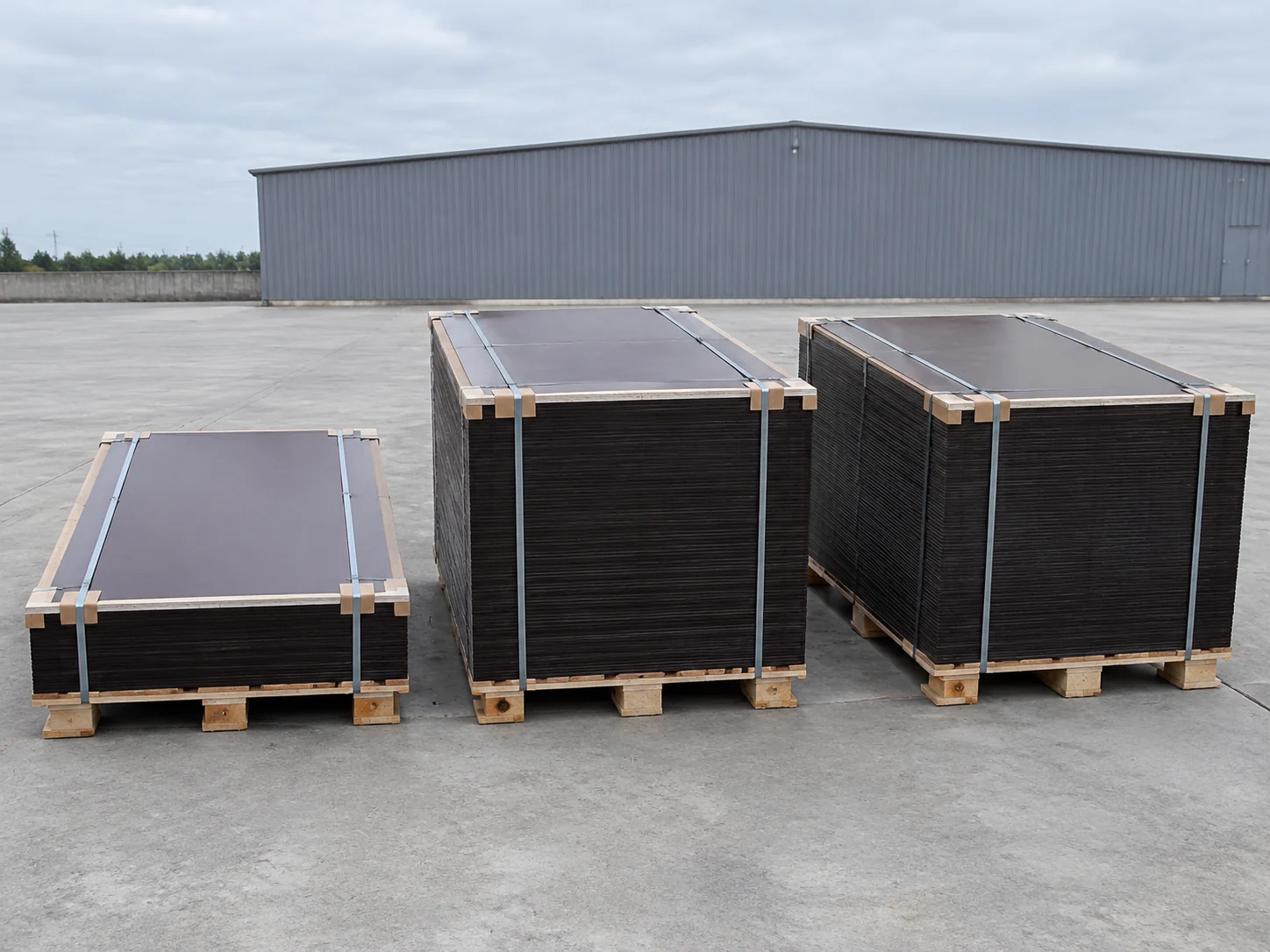
Example 40HC plan
Illustration of a mixed load. Real plans follow sheet weight and the container's payload.
Packing
Export bundles sit on skids with plywood top boards, corner protectors and steel straps. Your own labels and edge marks can be applied per bundle.
Documents
Certificates and test reports for your build are shared before you confirm the order. Draft shipping documents follow loading for your approval.
*Supplied directly or through qualified partner mills.
For EU importers
Plywood falls under the EU Deforestation Regulation from 30 December 2026 for large and medium operators (and micro and small operators already covered by EUTR), and from 30 June 2027 for other micro and small companies. Vietnam is classified as low risk under Implementing Regulation (EU) 2025/1093. For each lot we supply the species, quantity, production dates and plot geolocation your due diligence statement needs. Implementing Regulation (EU) 2025/1093
Ask for the dossierThe name
Concrete, in the languages of the European sites these panels are made for. Betonply is plywood made for concrete first.
Project supply
A building is poured over months. We record the specification of your first container and repeat it, so the panels on the twentieth floor match the panels on the first.
Containers planned against your pour sequence.
Core, glue, film and tolerance kept on file for repeat orders.
The same desk from quotation to the last bill of lading.
Terms
See it made
Buyers are welcome at both member mills in northern Vietnam. We arrange the visit, the samples and a build review at the mill that will press your panels.
Questions
As a guide, melamine (MR) film-faced builds reach about 12–15 pours and phenolic (WBP) builds up to about 25, when panels are stored flat, oiled before each pour and resealed after cutting. Tell us your target and we size the build to it.
The glue. MR uses melamine glue; WBP uses phenolic glue that stays stronger in repeated wet cycles. WBP builds usually pair with an A-grade core and heavier film.
1250 × 2500 mm for European formwork systems and 1220 × 2440 mm worldwide, in common thicknesses from 9 to 21 mm. Custom sizes and other thicknesses are available on request.
Yes. One or two builds per container is usual; three to six can be combined by agreement. Each bundle holds one size and one build.
CE marking with a Declaration of Performance to EN 13986 is available for the builds that need it, supplied directly or through qualified partner mills. Ask for it with your quotation.
Thickness, film coverage, edge sealing, flatness, sheet count and packing, against the build on your order. You receive the inspection photos before the container leaves.
A 30% deposit starts production; the remaining 70% falls due against the scanned bill of lading, by bank transfer or an irrevocable sight L/C. Prices are quoted FOB Hai Phong, CFR or CIF.
Yes. Both member mills are in northern Vietnam. We arrange the visit, samples and a build review at the mill that will make your order.
Contact
Write to the export desk with what you are pouring. We reply with the build, the documents and the next steps.
Export desk
contact@The online form opens soon. Until then, email reaches the export desk directly.